Dental Bridges in Johns Creek
A bridge fills the gap left by one or more missing teeth with a fixed, natural-looking replacement anchored to the teeth on either side. It is cemented in place, so it stays put, and it keeps your other teeth from drifting into the space.
- weeks from consultation to final bridge
- 2 to 3
- years a bridge lasts with good care
- 5 to 15
- in place: nothing to take out at night
- Fixed

Missing a tooth
or two?
Book a consultationWhat is a
dental bridge?
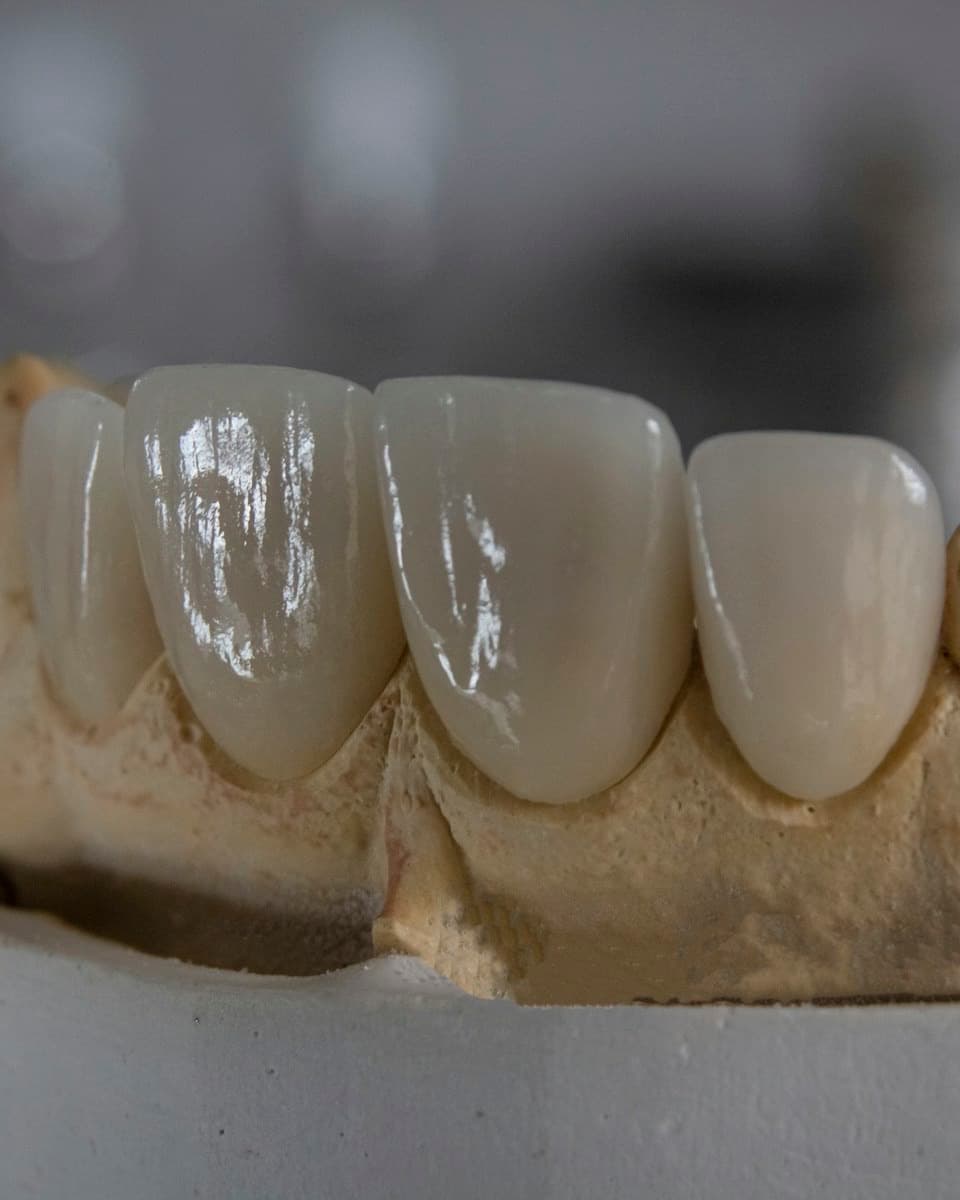
A dental bridge is a row of connected crowns. The crowns at each end fit over the teeth beside the gap, and the tooth or teeth in the middle span it. Once cemented, the bridge works as one piece: you chew on it, brush it, and forget it is there.
There are three kinds. A traditional bridge uses crowns on the neighboring teeth and is the usual choice when those teeth are healthy. A Maryland bridge bonds thin wings to the back of the neighboring teeth instead, a less invasive option for a single front tooth. An implant-supported bridge rests on implants rather than teeth, the strongest answer when several teeth in a row are missing.
Left alone, the gap from a missing tooth lets the teeth beside it tip and the tooth above or below it drift, which changes your bite. A bridge closes the space before that happens, and what a bridge estimate includes shows how the fee is built.
At Johns Creek Family Dentistry, Dr. Bhoompalli looks at your whole bite, not just the gap, and tells you honestly whether a bridge or an implant is the better long-term answer for your mouth.
How long does a bridge take?
About two to three weeks from consultation to final bridge, over two visits: one to shape the anchor teeth and take an impression, one to fit and cement the finished bridge. An implant-supported bridge takes several months, because the implants heal first.
Does getting a bridge hurt?
No. The anchor teeth are numbed before shaping, and the visit feels like getting a crown. Some sensitivity for a few days afterward is normal. Patient comfort comes first here; if you are anxious, say so and we will plan around it.
How much does a bridge cost?
Bridges range from $1,500 to $5,000 per tooth depending on the type and how many teeth it replaces. Most dental plans cover part of a bridge. Your exact fee is set at your consultation, along with financing options if you want them.
How do I care for a bridge?
Brush as usual and clean underneath the replacement tooth every day with a floss threader or a small interdental brush, since food collects there. Keep your regular cleanings so we can check the anchor teeth.
Is a bridge right for you?
A gap never stays a gap. The teeth around it move.
A bridge suits people with strong, healthy teeth on both sides of a gap, and people who want a fixed replacement without implant surgery or the months it takes. If the neighboring teeth are weak, or the gap is long, an implant or an implant-supported bridge is often the sounder choice. An exam and x-rays decide.
One to three missing teeth in a row
The classic case for a traditional bridge: a short gap with a solid tooth at each end to carry it.
Healthy teeth on both sides of the gap
The anchor teeth carry the load, so they need sound roots and healthy gums to do it for years.
Neighboring teeth that already need crowns
If the teeth beside the gap have large fillings or cracks, crowning them for a bridge fixes two problems at once.
Not a candidate for implants, or not yet
Bone loss, certain health conditions, or timing can rule implants out. A bridge replaces the tooth without surgery.
A single missing front tooth
A Maryland bridge replaces a front tooth with almost no drilling of the neighbors, bonded in one visit once made.
Several missing teeth in a row
An implant-supported bridge can replace three or more teeth on two implants, with nothing resting on natural teeth.
Questions about dental bridges
The things patients ask once they are weighing a bridge against the alternatives. Anything not covered here is a phone call away.
Still have a question? Call 770-814-7600 or text the same number.
Page updated September 2026
Bridge or implant: which is better?
An implant replaces the root and leaves the neighboring teeth alone, so for a single missing tooth with healthy neighbors it is usually the longer-lasting choice. A bridge is faster, needs no surgery, and makes sense when the neighboring teeth need crowns anyway. Dr. Bhoompalli will tell you which she would choose in your case.
Will a bridge look like my own teeth?
Yes. The bridge is made to match the color and shape of the teeth around it, and the replacement tooth is contoured to sit against the gum so there is no dark space above it.
What is the temporary bridge for?
It protects the shaped anchor teeth and holds the space while the lab makes your permanent bridge. Treat it gently: chew on the other side, skip sticky foods, and call us if it loosens rather than pressing it back on.
Can a bridge be taken out?
Not by you. A fixed bridge is cemented onto the anchor teeth and stays in around the clock, which is the main difference from a partial denture. A dentist can remove it if the anchor teeth ever need treatment.
What happens if an anchor tooth gets a cavity?
The bridge usually has to come off so the tooth can be treated, and then it is remade. That is why cleaning under the bridge every day and keeping your cleanings matters: the anchor teeth are doing the work of two.
Does a bridge stop bone loss?
No. A bridge sits above the gum, so the jawbone under the missing tooth slowly shrinks over the years. An implant is the only replacement that keeps that bone stimulated, which is one reason we talk through both options with you.
Does insurance cover bridges?
Most dental plans cover a percentage of a bridge, often on the same terms as a crown. We verify your benefits before treatment, and financing and an in-house membership plan are available for what is left.
Where to next?
Related treatment
Dental Implants
A titanium post in the jaw with a crown on top replaces a tooth from the root up, with nothing done to the neighboring teeth.
Explore the treatment
Related concern
Missing Teeth
One tooth or a full arch, fixed or removable
Explore the concern
Common question
Dental bridge or implant for one missing tooth?
Compare a bridge and an implant for one missing tooth by support, tooth preparation, cleaning, and treatment stages.
Read the answer