Night Guards in Johns Creek
If you wake up with a sore jaw, a headache, or teeth that feel worn, you may be grinding in your sleep. A custom night guard puts a cushion between your teeth so the grinding stops doing damage.
$200 off a custom night guard Mention the offer when you book.
- soft, hard, or dual-laminate, matched to how hard you grind
- 3 types
- years a custom guard lasts with proper care
- Several
- made from a mold of your own teeth, not a boil-and-bite blank
- Custom

Waking up with
a sore jaw?
Book a consultationWhat is a
night guard?
A night guard is a thin, custom-made appliance worn over your teeth while you sleep. It acts as a cushion between your upper and lower teeth, so when you grind or clench, the guard takes the wear instead of your enamel, or of the crowns and veneers you have invested in. It also eases the strain on your jaw muscles and joints.
Grinding and clenching, called bruxism, is common and mostly happens during sleep, so many people have no idea they do it. Over time it flattens and chips teeth, cracks fillings, makes teeth sensitive, and leaves the jaw sore and tight in the morning. Stress, sleep disorders, and bite problems all contribute.
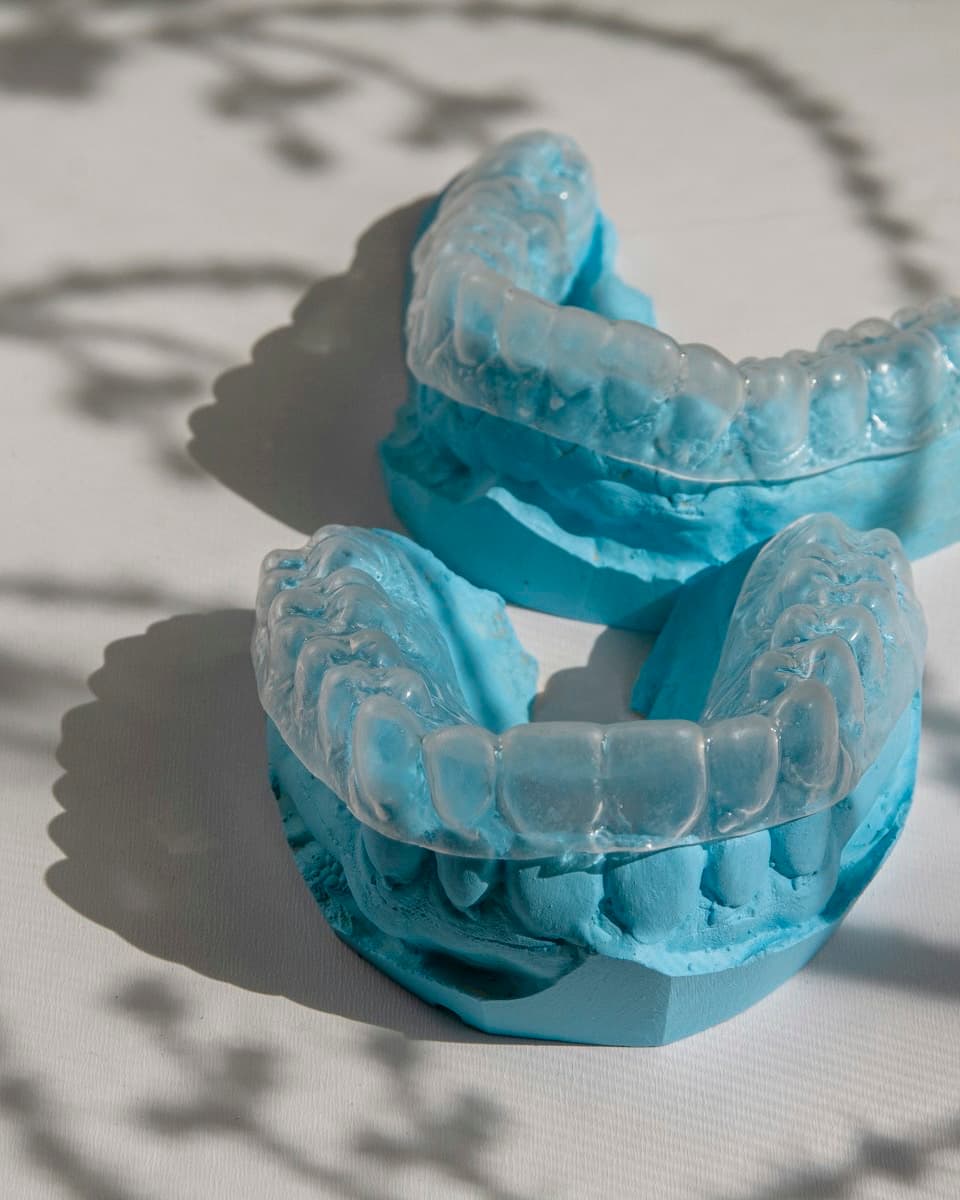
Guards come in soft, hard, and dual-laminate versions, made from thermoplastic or acrylic. Dr. Bhoompalli takes an impression of your teeth, and a dental lab makes a guard that fits them exactly, which a store-bought guard cannot do. When the guard is ready she checks the fit and your bite on it and adjusts it until it sits comfortably.
At Johns Creek Family Dentistry, a night guard is not handed over in isolation. Dr. Bhoompalli checks your bite and your airway as part of the exam, because grinding often points to something else worth knowing about.
How long does it take to get a night guard?
Dr. Bhoompalli examines your teeth and takes an impression, the guard is made by a dental lab, and once it is ready she fits and adjusts it. Expect a few nights to get used to sleeping with it in; after that most people barely notice it.
Is a night guard uncomfortable?
A custom guard is thin and follows your teeth exactly, so it is far less bulky than a store guard. It can feel strange for the first few nights and may make you salivate a little more. That settles quickly. If a spot rubs or your bite feels off on the guard, we adjust it.
How much does a night guard cost?
Custom night guards typically run $300 to $800, compared with $20 to $100 for a store-bought guard that fits loosely and wears out fast. Many dental plans cover part of a custom guard. Your exact fee is set at your consultation, and right now custom night guards are $200 off.
How do I clean and care for my night guard?
Rinse it with cool water every morning, brush it gently with a soft brush and mild soap, and let it dry before it goes in its case. Skip hot water and toothpaste, which warp and scratch the plastic. Bring it to your regular visits so it can be checked for fit and wear.
Do you need a night guard?
You cannot stop grinding while you sleep. You can stop it from wearing your teeth down.
Night guards suit almost anyone who grinds or clenches, including teens once their permanent teeth are in. If your symptoms come from the jaw joint or a bite problem, Dr. Bhoompalli will find that at your exam and talk through what else might help. Bring your questions, and bring your partner's observations too.
A sore, tight, or clicking jaw in the morning
Jaw muscles that have clenched all night are tired and tender when you wake.
Dull headaches, especially near the temples
The muscles that close your jaw run up the side of your head. Overnight clenching leaves them aching.
Flattened, chipped, or worn-looking teeth
Grinding sands down the biting edges. Dr. Bhoompalli can often see it before you feel it.
Teeth that have become sensitive to cold
Worn enamel exposes the softer layer beneath, and hairline cracks let cold reach the nerve.
A partner who hears you grinding
The sound is unmistakable, and it is often the first way people find out.
Crowns, veneers, or implants to protect
Grinding is hard on dental work. A guard protects the investment you have already made in your smile.
Questions about night guards
The things patients ask once they suspect they grind. Anything not covered here is a phone call away.
Still have a question? Call 770-814-7600 or text the same number.
Page updated September 2026
How do I know if I grind my teeth at night?
Most people do not, because it happens while they sleep. The clues are a sore or tight jaw in the morning, dull headaches near the temples, teeth that feel sensitive, a partner who hears the grinding, or flattened and chipped edges that Dr. Bhoompalli spots at your exam.
Why not just buy a night guard at the store?
Store guards are boil-and-bite blanks that fit loosely, feel bulky, and often wear through in months. A custom guard is made from an impression of your own teeth, so it is thinner, stays put, and spreads the force of clenching evenly instead of concentrating it on a few teeth.
Soft or hard: which type do I need?
Soft guards suit light grinders and are the easiest to get used to. Hard acrylic guards last longer and are better for heavy grinding. Dual-laminate guards are soft on the inside for comfort and hard on the outside for protection. Dr. Bhoompalli recommends a type based on the wear she sees on your teeth.
Will a night guard stop my headaches and jaw pain?
For many people, yes. A guard keeps your jaw muscles from clenching at full force all night, which is what leaves them sore in the morning. If your symptoms come from a bite problem or the jaw joint itself, Dr. Bhoompalli will check for that too, since a guard alone may not be the whole answer.
Does a night guard fix the grinding itself?
No. It protects your teeth and jaw from the damage grinding causes, but it does not stop the habit. Stress, sleep quality, caffeine, and bite alignment all play a role. The guard is the protection while any of those underlying causes are addressed.
Can a night guard help with snoring?
A standard night guard does not. Snoring and sleep apnea call for a different kind of oral appliance, one that positions the jaw forward to keep the airway open. Tell Dr. Bhoompalli if snoring is part of the picture so the right appliance is considered.
Does a night guard change my bite?
A properly fitted, professionally adjusted guard should not. Ill-fitting store guards, or a guard worn on only a few teeth, can let teeth shift over time. Bring it to your regular visits so Dr. Bhoompalli can confirm it still fits well and adjust it if anything has changed.
Where to next?
Related treatment
Dental Crowns
A crown replaces the outer layer that years of grinding have worn away and holds what is left of the tooth together so it can take a full bite again.
Explore the treatment
Related concern
Chipped or Worn Front Teeth
Rebuild an edge, from a quick fix to a full cover
Explore the concern
Common question
Custom night guard or store-bought guard: what should you compare?
Compare custom and store-bought night guards by assessment, fit, comfort, and follow-up for teeth grinding.
Read the answer
Sleep Easy,
Wake Up Pain-Free
Prefer to talk? Call 770-814-7600 during office hours.