Dental Crowns in Johns Creek
A crown covers a damaged tooth completely, giving it back its shape, strength, and color so you can chew on it again without thinking about it. Dr. Bhoompalli matches the material to the tooth, from lifelike porcelain up front to metal where the chewing is hardest.
- years a crown lasts with good care
- 5 to 15
- from preparation to final fit
- Two visits
- materials to choose from: porcelain, ceramic, metal, or resin
- Four
Cracked or
worn tooth?
Book a consultationWhat is a
dental crown?
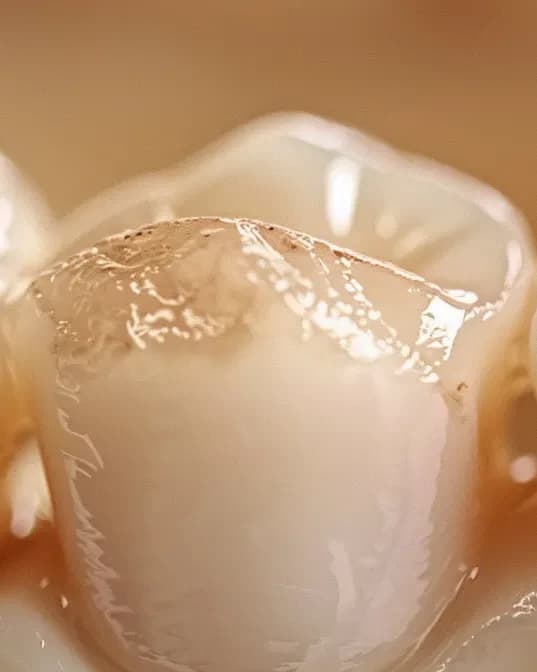
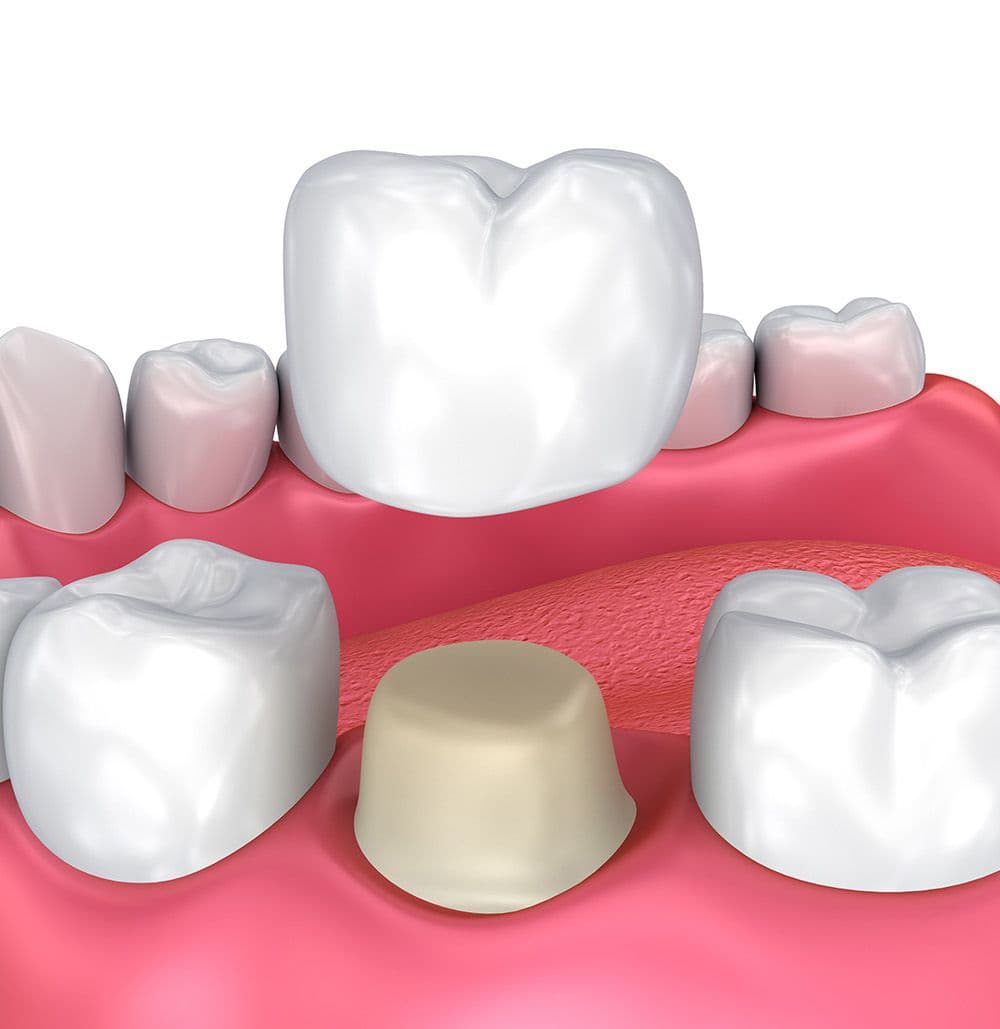
A dental crown is a custom cap that fits over the whole visible part of a tooth. It replaces the outer layer that decay, a crack, a large old filling, or years of grinding have worn away, and it holds what is left of the tooth together so it can take a full bite again, which is the point where a crown rather than a filling makes sense.
Crowns come in porcelain and ceramic, which match the color of your natural teeth and suit front teeth; metal, which is the strongest choice for molars that do the heavy chewing; and resin, a lower-cost option that wears down faster. Dr. Bhoompalli walks you through which fits the tooth, its location, and your budget, and what a crown costs here covers the numbers.
A crown is also how a tooth is finished after a root canal, and it is the visible part of a dental implant. In every case the goal is the same: keep your own tooth, or the space it occupied, working for as long as possible.
At Johns Creek Family Dentistry, crowns are shaped and shade-matched by Dr. Bhoompalli, who checks how the new crown meets the opposite tooth before you leave, because a crown that sits even slightly high will hurt.
How long does a crown take?
Two visits. At the first, the tooth is shaped, an impression is taken, and you leave with a temporary crown. At the second, the permanent crown is tried in, the bite is checked and adjusted, and it is cemented in place.
Does getting a crown hurt?
No. The tooth is numbed before any shaping, and most patients feel little to nothing during the appointment. Some sensitivity to hot and cold for a few days afterward is normal and fades on its own. If you are anxious, say so; anti-anxiety medication and music are available.
How much does a crown cost?
Crowns run $800 to $1,500 depending on the material and the tooth. Most dental plans cover a portion of a crown when it is needed to restore a damaged tooth. Your exact fee is set at your consultation, before any work begins.
How do I care for a crown?
Brush and floss it like a natural tooth, paying attention to the gum line where the crown meets the tooth, since decay can still start there. Avoid chewing ice or hard candy, and wear a night guard if you grind your teeth.
Is a crown right for you?
A filling patches a tooth. A crown holds it together.
A crown is the right call when too much of the tooth is gone for a filling to hold, and the wrong call when a smaller repair will do. Dr. Bhoompalli takes a conservative approach: if a filling or an onlay will keep the tooth sound, that is what she recommends. An exam and an x-ray tell us which.
A large cavity or a failing old filling
When a filling would be bigger than the tooth around it, a crown gives the tooth back its strength instead of splitting it.
A cracked or chipped tooth
A crown holds a cracked tooth together so the crack cannot spread down into the root, where the tooth would be lost.
A tooth that has had a root canal
Back teeth are brittle after a root canal. A crown keeps them from fracturing under chewing pressure.
A tooth worn flat by grinding
Crowns rebuild the height of worn teeth and restore the bite, often alongside a night guard to protect them.
A badly discolored or misshapen tooth
When whitening or a veneer will not do the job, a crown covers the whole tooth in a natural shade and shape.
A tooth anchoring a bridge, or an implant
Crowns on the teeth beside a gap hold a bridge in place, and a crown is the final piece of every dental implant.
Questions about dental crowns
The things patients ask once they know a crown is on the table. Anything not covered here is a phone call away.
Still have a question? Call 770-814-7600 or text the same number.
Page updated September 2026
Porcelain or metal: which should I choose?
Porcelain or ceramic for anything that shows when you smile. Metal, or porcelain fused to metal, for back molars that take the hardest chewing. People who grind often do better with metal on the back teeth. Dr. Bhoompalli will tell you which she would choose for that particular tooth.
Will the crown match my other teeth?
Yes. The shade is chosen against your neighboring teeth before the crown is made, and the shape is built to fit the space and your bite. Once it is cemented, most people cannot tell which tooth has the crown.
What is the temporary crown like?
It is a plastic version of the final crown, cemented lightly so it comes off cleanly at the next visit. Chew on the other side, skip sticky or hard foods, and when you floss, pull the floss out sideways rather than up so it does not lift the temporary.
Can a crown get a cavity?
The crown itself cannot decay, but the tooth underneath can, right at the edge where crown meets tooth. That is why flossing around a crown and keeping your regular cleanings matters just as much as it did before.
What if my crown feels high or comes off?
Call us. A crown that feels high when you bite is adjusted in a few minutes, and a crown that comes loose can often be re-cemented if you bring it with you. Please do not glue it back yourself.
Do I need a crown after a root canal?
Almost always on a back tooth. A tooth that has had a root canal is drier and more brittle, and a crown keeps it from cracking under chewing pressure. Front teeth can sometimes be finished with a filling instead.
Does insurance cover crowns?
Most dental plans cover a percentage of a crown that restores a damaged tooth. Crowns placed for purely cosmetic reasons usually are not covered. We check your benefits before treatment, and financing and an in-house membership plan are available for the balance.
Where to next?
Related treatment
Root Canal Therapy
Removes the infected nerve inside a tooth, ends the pain, and saves the tooth, which is then usually finished with a crown.
Explore the treatment
Related concern
Cracked or Broken Tooth
Hold the tooth together before it splits
Explore the concern
Common question
Do you need a crown or another filling?
Learn how remaining tooth structure affects the choice between a filling and a crown before your Duluth dental visit.
Read the answer
Make a Weak Tooth
Strong Again
Prefer to talk? Call 770-814-7600 during office hours.