Invisalign in Johns Creek
Straighten your teeth with a series of clear, removable aligners instead of metal brackets and wires. Dr. Bhoompalli plans every case around your bite as well as your smile, so the result looks right and works right.
$1,500 off Invisalign for cases started in September. Mention the offer when you book.
- months for a typical case
- 12 to 18
- hours a day the aligners are worn
- 20 to 22
- trays that are nearly invisible when worn
- Clear

Curious about
Invisalign?
Book a consultationWhat is
Invisalign?
Invisalign straightens crooked or gapped teeth with a series of clear, custom-made aligner trays. Each set moves your teeth a small, planned amount, and every one to two weeks you switch to the next set until your teeth settle into their final position.
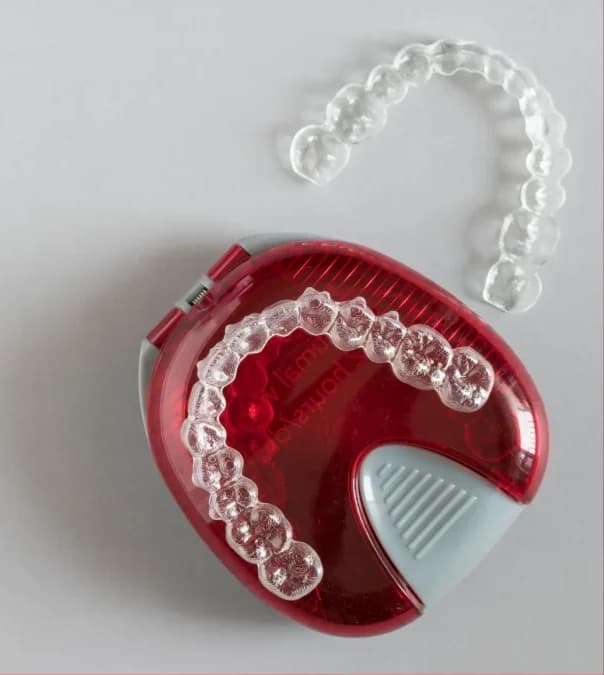
The trays are made from a smooth, nearly invisible plastic and come out for meals and brushing. There are no brackets to irritate your cheeks, no wires to tighten, and no foods you have to give up, which is most of how Invisalign compares with braces.
Treatment starts with a scan or impressions of your teeth. From those, Dr. Bhoompalli maps every stage of movement before your first aligner is made, so you can see where your smile is headed from day one, along with what your Invisalign quote should include.
At Johns Creek Family Dentistry, your aligners are planned by a dentist with advanced Invisalign training who checks your bite, not just your front teeth, at every stage.
How long does Invisalign take?
Most cases finish in 12 to 18 months. Mild crowding or spacing can be quicker, and more complex bite corrections take longer. You get a realistic timeline at your consultation, before you commit to anything.
Does Invisalign hurt?
You may feel gentle pressure for a day or two after each new set of trays. That is the aligner doing its job, and it fades quickly. There are no wires or brackets to rub against your lips or cheeks.
How much does Invisalign cost?
Invisalign typically runs $3,000 to $8,000 depending on the length of treatment, and many dental plans cover it the same way they cover braces. Your exact fee is set at your consultation, and cases started in September are $1,500 off.
How do I care for my aligners?
Rinse them after eating, brush them gently with a soft brush and no toothpaste, and keep them in their case whenever they are out of your mouth. Skip hot water, which can warp the plastic.
Is Invisalign right for you?
Straight teeth are only half the goal. A bite that works is the other half.
Invisalign handles most crowding, spacing, and mild to moderate bite problems in teens and adults. Severe bite issues or very rotated teeth sometimes need braces or a combined approach. The only way to know is a consultation, where Dr. Bhoompalli examines your teeth, your bite, and what you want to change.
Crowded or overlapping teeth
Teeth that bunch up or twist because there is not quite enough room in the arch.
Gaps between teeth
Spacing anywhere in the smile, from a single gap between the front teeth to several across the arch.
Mild to moderate bite problems
Overbite, underbite, crossbite, or an open bite that is not severe enough to need surgery or full braces.
Teeth that shifted after braces
Relapse from years without a retainer is one of the most common reasons adults choose Invisalign.
Room in your day for 20 to 22 hours of wear
The trays only work while they are in. Out for meals and brushing, in for everything else.
Healthy teeth and gums to start
Cavities and gum disease are treated first, so the teeth being moved have a sound foundation.
Questions about Invisalign
The things patients ask once they are seriously considering treatment. Anything not covered here is a phone call away.
Still have a question? Call 770-814-7600 or text the same number.
Page updated September 2026
Can I eat and drink with Invisalign in?
Take the trays out for anything other than water. Food stains and warps the plastic, and sugary or hot drinks get trapped against your teeth. Eat, brush, and put them back in.
Will Invisalign change how I talk?
Some people notice a slight lisp for the first day or two with a new set. It fades as your tongue adjusts, usually within a few days, and most people around you never notice.
How often do I need to come in?
Every few weeks. You receive several sets of trays at each visit, and Dr. Bhoompalli checks that your teeth are tracking with the plan before handing over the next batch.
How is this different from mail-order aligners?
Mail-order kits move teeth from a home impression with no dentist checking your bite, roots, or gum health along the way. Here every stage is planned from a scan or impressions and reviewed in person, and problems get caught while they are still small.
Is Invisalign an option for teens?
Yes. Invisalign Teen trays include small wear indicators so parents and the dentist can see the trays are being worn enough. Most teens do well with them once all their permanent teeth are in.
What if I lose or crack a tray?
Call the office the same day. Depending on where you are in the sequence, you will either move to the next set early or wear the previous set while a replacement is made. Do not skip ahead without checking.
What happens when treatment is finished?
You get retainers. Teeth drift for years after any orthodontic treatment, so nightly retainer wear is what keeps the result you paid for. We check the fit at your regular cleanings.
Where to next?
Related treatment
Dental Veneers
Thin porcelain or composite shells bonded to the front of the teeth that change color, shape, and length in one step.
Explore the treatment
Related concern
Crooked or Gapped Teeth
Move the teeth, or reshape the ones that show
Explore the concern
Common question
Invisalign or braces: which fits your daily routine?
Compare Invisalign and fixed braces by daily responsibilities and treatment goals before your Johns Creek consultation.
Read the answer
A Straighter Smile,
Without the Metal
Prefer to talk? Call 770-814-7600 during office hours.