Dentures in Johns Creek
Full or partial dentures replace missing teeth so you can eat, speak, and smile without thinking about it. Dr. Bhoompalli fits every set to your mouth and your bite, then adjusts it until it feels right.
$200 off dentures for new denture cases. Mention the offer when you book.
- years a well-cared-for set typically lasts
- 5 to 10
- full sets and partials, depending on how many teeth are missing
- Two types
- immediate dentures placed right after teeth are removed
- Same day
Thinking about
dentures?
Book a consultationWhat are
dentures?
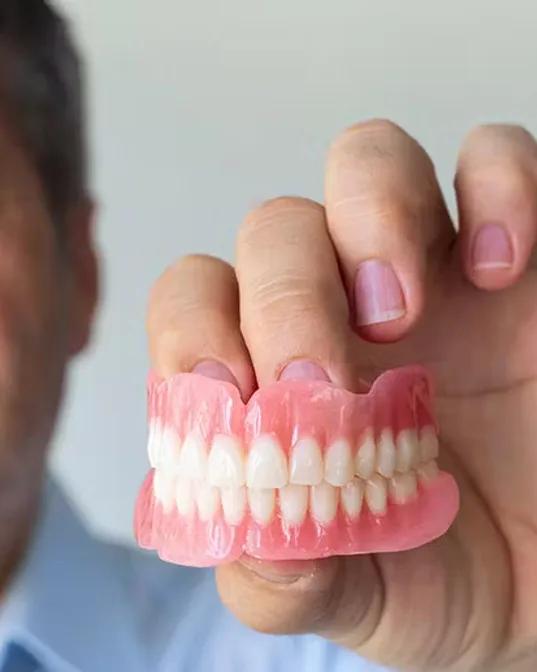
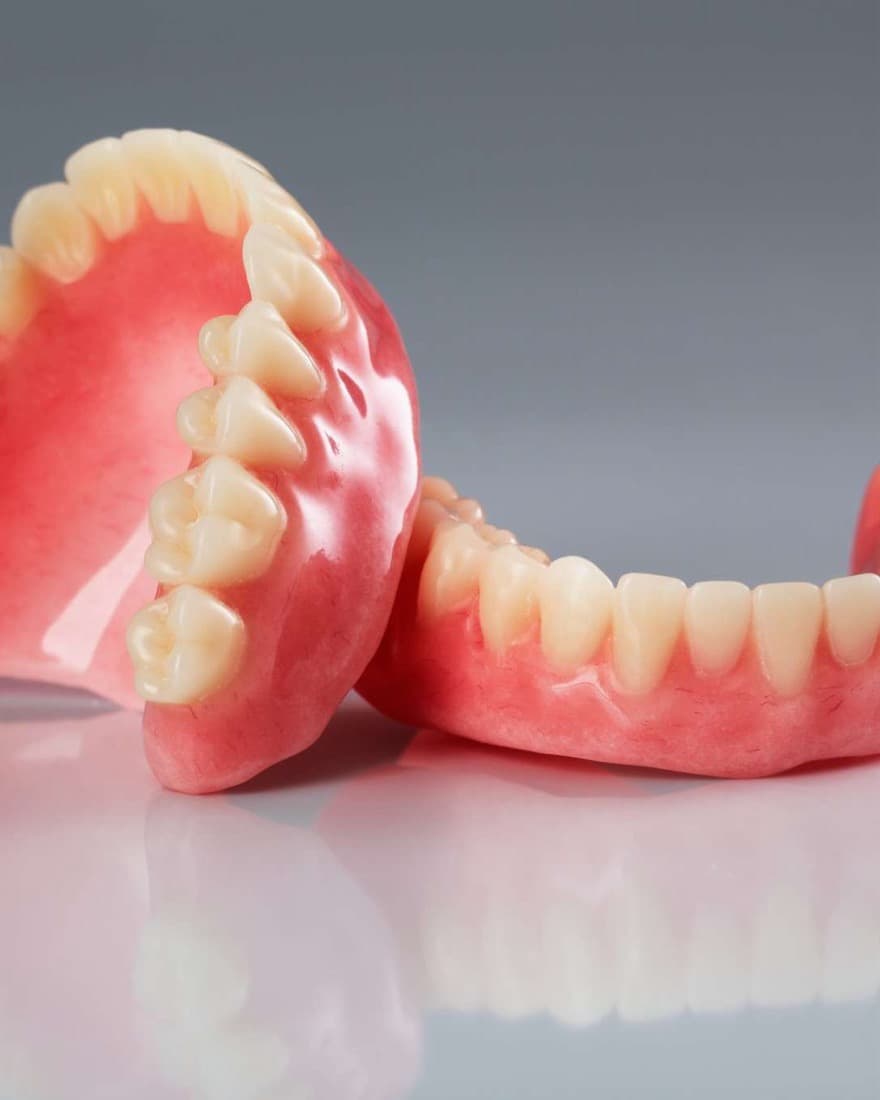
A denture is a removable set of replacement teeth on a gum-colored base. A full denture replaces every missing tooth in the upper or lower arch. A partial denture fills the gaps between teeth you still have, and clips to those teeth for support; partial versus full dentures walks through which one fits.
Getting a set takes a few visits. After an exam and x-rays to check your gums and jawbone, we take molds of your mouth and usually do a trial fitting so the shape, bite, and shade are right before the final set is made.
When the dentures are ready you come in for the fitting, and we adjust anything that rubs. Follow-up visits are part of the plan, and if the fit loosens over the years a reline brings it back. What a denture price should include explains how those visits figure into the fee.
At Johns Creek Family Dentistry, a denture is made to your mouth and your bite, then adjusted until it sits comfortably, not handed over and forgotten.
How long do dentures take?
Most sets are finished over a few visits spread across several weeks: exam and x-rays, molds, usually a trial fitting, then the final fitting. Immediate dentures are the exception. They are made in advance and placed the day your teeth are removed.
Do dentures hurt?
No. Any extractions are done fully numb, and comfort comes first at every step. New dentures can rub for the first week or two while your gums adjust. That is what the follow-up visits are for: small adjustments that take minutes and make the difference.
How much do dentures cost?
Dentures cost less than most other ways of replacing a full arch. The fee depends on whether you need a full or partial set and the materials chosen. Most insurance is accepted, and a membership plan and financing are available. Your exact fee is set at your consultation, and new denture cases are currently $200 off.
How do I care for my dentures?
Brush them daily with a soft brush and a denture cleaner, never regular toothpaste, which is abrasive. Take them out at night and keep them in water or soaking solution so they do not dry out and warp. Brush your gums and any remaining teeth too.
Are dentures right for you?
Replacing teeth is about function first. Eating and speaking comfortably is the goal.
Dentures suit people missing several teeth or a whole arch who want a straightforward, removable, affordable replacement. If you have worn dentures for years and struggle with slipping or adhesive, ask about implant-supported dentures instead, which lock in place. Dr. Bhoompalli walks you through both at your consultation.
All the teeth in an arch are missing
A full upper or lower denture replaces the whole arch and restores your bite and the support behind your lips.
Several teeth are missing, others are healthy
A partial denture fills the gaps and clips to the teeth you still have, keeping them from drifting.
Teeth that need to come out
An immediate denture is made ahead of the extractions so you leave the office with teeth.
An old denture that no longer fits
Rocking, sore spots, or constant adhesive mean the fit has changed. A reline or a new set fixes it.
You prefer a non-surgical option
Dentures need no implants and no surgery beyond any extractions, which matters if implants are not right for you.
Willing to clean them daily and come to follow-ups
Daily cleaning, nightly removal, and regular check-ups are what keep a denture comfortable for its full life.
Questions about dentures
The things patients ask once they are seriously considering treatment. Anything not covered here is a phone call away.
Still have a question? Call 770-814-7600 or text the same number.
Page updated September 2026
Can I eat normally with dentures?
Yes, after an adjustment period. Start with soft foods cut into small pieces and chew on both sides at once, which keeps the denture balanced. Most people work back up to a normal diet within a few weeks. Very sticky or hard foods stay tricky with a conventional denture.
Will dentures change how I speak?
A little at first. Certain sounds can feel odd for the first week or two while your tongue and lips learn the new shape. Reading aloud at home speeds it up, and most people sound like themselves again quickly.
What are immediate dentures?
A denture made before your teeth are removed and placed the same day, so you are never without teeth while the gums heal. Because the gums shrink as they heal, an immediate denture usually needs a reline or a replacement once healing is complete.
Should I sleep in my dentures?
No. Take them out at night so your gums can rest and to lower the risk of irritation and infection. Keep them in water or a soaking solution overnight so the acrylic does not dry out and lose its shape.
Do I need denture adhesive?
A well-fitting denture should not need much. A small amount can add security, but if you find yourself relying on it to get through a meal, the fit has changed and it is time for a reline. If you are tired of adhesive altogether, ask about implant-supported dentures, which lock in place.
What is a reline?
Your gums and the bone under them change shape over time, so a denture that once fit snugly starts to rock. A reline adds new material to the inside of the base so it matches your gums again. It is a routine service, far cheaper than a new set, and part of keeping a denture comfortable for its full life.
What happens to my jawbone under a denture?
Bone needs tooth roots to stay dense. Without them it slowly shrinks, which is why dentures loosen over the years and why the lower face can change shape. Dental implants are the one way to slow that process, which is worth knowing when you are choosing between a conventional and an implant-supported denture.
Where to next?
Related treatment
Implant-Supported Dentures
A few titanium posts in the jaw anchor a full set that snaps or screws in place, so it does not rely on suction or adhesive.
Explore the treatment
Related concern
Missing Teeth
One tooth or a full arch, fixed or removable
Explore the concern
Common question
Partial or full dentures: which teeth need replacing?
Understand partial and full dentures, remaining teeth, and the difference between immediate and conventional treatment.
Read the answer