Dental Bonding in Johns Creek
Bonding repairs a chipped, cracked, gapped, or discolored tooth with tooth-colored resin, shaped and polished right on the tooth in a single visit. It is the quickest, most conservative way to fix one thing that bothers you about your smile.
- from start to a finished, polished tooth
- One visit
- years bonding typically lasts with good care
- Several
- enamel removed, often none at all
- Minimal

Curious about
bonding?
Book a consultationWhat is
dental bonding?
Dental bonding is a repair made from composite resin, the same tooth-colored material used in modern fillings. The resin goes on soft, so Dr. Bhoompalli can sculpt it to rebuild a chipped corner, fill a gap, cover a stain, or reshape a tooth that is smaller or more uneven than its neighbors.
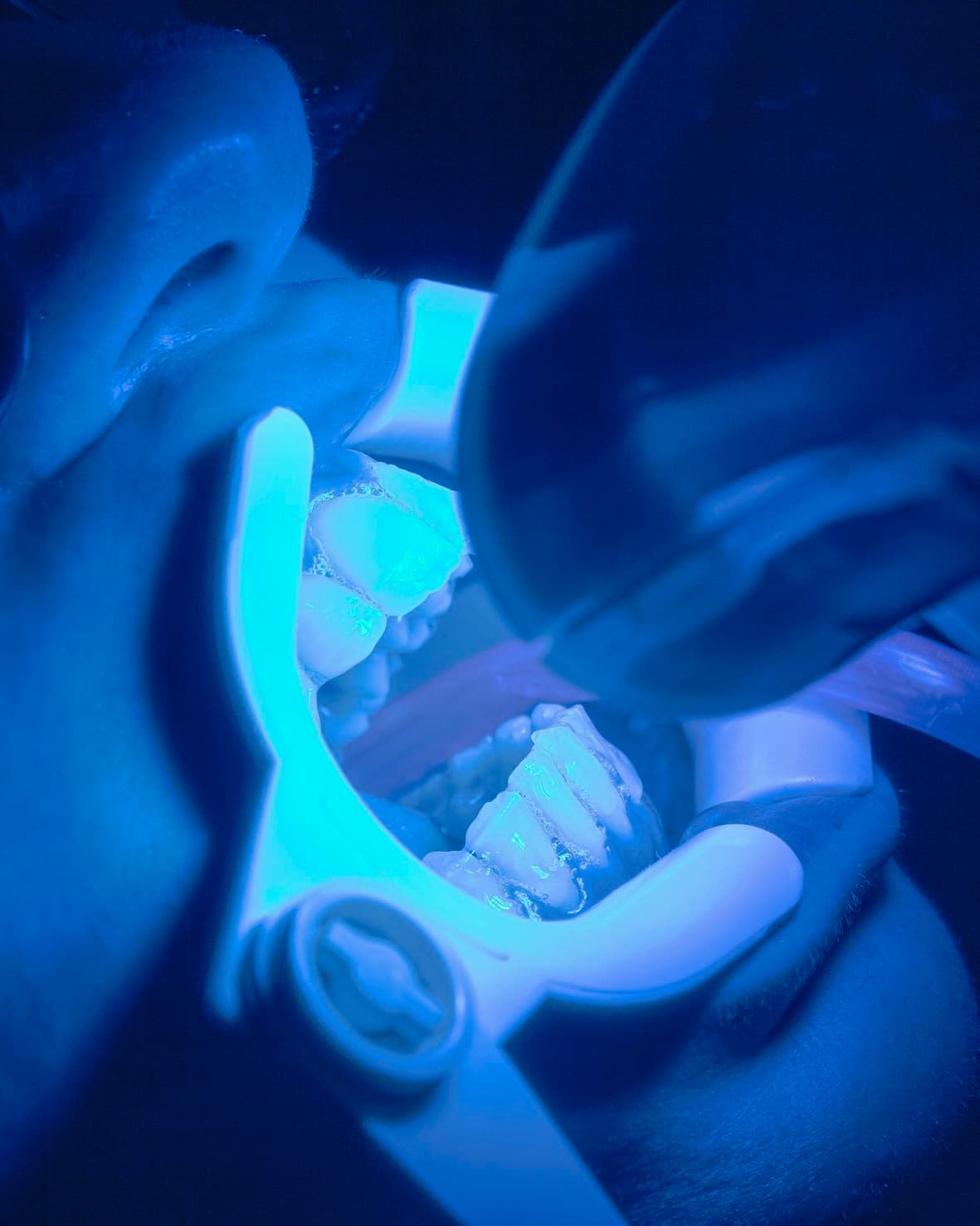
The tooth is cleaned and lightly roughened so the resin grips, then the shade-matched resin is layered on and shaped. A curing light hardens each layer in seconds. Once the shape is right, the surface is trimmed and polished until it blends with the enamel around it.
Because the resin bonds directly to the tooth, there is no lab, no temporary, and in most cases no numbing. You walk in with a chip and walk out the same visit with a tooth that looks like it was never damaged; bonding a chipped front tooth walks through that visit.
At Johns Creek Family Dentistry, bonding is the first option considered for small cosmetic fixes, because it keeps your natural tooth intact and leaves every other option open for later. For what to expect on the bill, see composite bonding cost.
How long does bonding take?
Usually a single visit. There is nothing to send to a lab and no second appointment, so a chip you notice on Monday can be fixed before the weekend.
Does bonding hurt?
For most cases, no numbing is needed at all, because little or no enamel is removed. If a chip is close to the nerve or bonding is being used to fill a cavity, we numb the tooth first. Patient comfort is the number one priority here; nothing is done in pain.
How much does bonding cost?
Dental bonding typically runs $300 to $600 per tooth, which makes it one of the most affordable cosmetic fixes we offer. Your exact fee is set at your consultation. Insurance sometimes covers bonding when it repairs damage rather than purely improving looks, and financing is available.
How do I care for a bonded tooth?
Treat it like the rest of your teeth: brush twice a day, floss, and keep your six-month cleanings. Avoid biting ice, hard candy, or fingernails with the bonded tooth, and if you grind at night, a night guard protects it.
Is bonding right for you?
Small problems deserve small fixes. Bonding keeps the tooth and solves the thing you notice.
Bonding is best for one or two teeth with a minor flaw: a chip, a small gap, a stain, or an uneven edge. It is not the strongest choice for back teeth that take heavy chewing, for large areas of damage, or for reshaping a whole smile, where a crown or veneers hold up better. Dr. Bhoompalli looks at the tooth and your bite and tells you plainly which fix fits.
A chipped or cracked front tooth
A corner knocked off in a fall, a sports hit, or biting something hard can be rebuilt to its original shape.
A small gap between teeth
Spaces between the front teeth can be closed by adding resin to the edges, with no braces.
A tooth that is stained or discolored
A single dark or spotted tooth that whitening will not lift can be covered to match the rest.
A tooth that is short, narrow, or misshapen
Peg-shaped or undersized teeth can be built out to sit in proportion with their neighbors.
Exposed roots from receding gums
Resin can cover a sensitive, notched root surface near the gumline and protect it from wear.
A fix you want done this week
If the goal is one tooth, one visit, and no lab wait, bonding is built for exactly that.
Questions about bonding
What patients ask once they are deciding between bonding and a bigger treatment. Anything not covered here is a phone call away.
Still have a question? Call 770-814-7600 or text the same number.
Page updated September 2026
Bonding or veneers: which do I need?
Bonding is the smaller fix: one visit, no lab, little or no enamel removed, and easy to repair. Veneers cost more and usually take two visits, but porcelain lasts longer, resists stains, and can change several teeth at once. For a single chip or a small gap, bonding is usually the sensible first step.
Will the bonded tooth match my other teeth?
Yes. The resin comes in many shades, and Dr. Bhoompalli picks the one that matches the tooth beside it, then layers and polishes it so the repair disappears. If you are planning to whiten, do that first; bonding is matched to your teeth as they are and will not lighten later.
Can bonding chip or come off?
It can, though it is uncommon with normal use. Resin is not as hard as porcelain, so biting fingernails, ice, or pen caps is the usual culprit. If a piece does chip, call us; bonding is simple to touch up in a single short visit.
Does bonding stain?
Over time, a little. Resin is slightly more porous than enamel, so heavy coffee, tea, red wine, or smoking can dull it. Rinsing with water after dark drinks and keeping your regular cleanings keeps it looking new for longer, and a worn surface can be re-polished.
Can bonding close the gap between my front teeth?
Often, yes. Resin is added to the edges of the two teeth to close a small to moderate gap in one visit, with no braces. A wide gap or one caused by a bite problem may be better handled with Invisalign, which we will tell you at the exam.
Is bonding an option for kids and teens?
It is one of the best ones. A chipped front tooth from a fall or a sports injury can be rebuilt the same week, with no drilling, and the resin can be adjusted as the child grows. Adult options like veneers wait until the teeth and jaws have finished developing.
Can bonding be removed or redone later?
Yes. Because little or no enamel is removed, bonding can be polished away, replaced, or upgraded to a veneer or crown later without harming the tooth. That is part of why it is such a conservative choice.
Where to next?
Related treatment
Dental Veneers
Thin, custom-made porcelain shells bonded to the front of the teeth cover chips, stains, gaps, and uneven edges in one step.
Explore the treatment
Related concern
Chipped or Worn Front Teeth
Rebuild an edge, from a quick fix to a full cover
Explore the concern
Common question
Can bonding repair a chipped front tooth?
Find out when bonding may repair a chipped front tooth and what damage needs assessment before cosmetic treatment.
Read the answer