Dental Fillings in Johns Creek
A filling removes decay and rebuilds the tooth with a composite material matched to your enamel, so the repair disappears into your smile. Dr. Bhoompalli fills most cavities in a single visit, comfortably numb, with nothing done in pain.
- is all most fillings take
- One visit
- years a composite filling typically lasts
- 5 to 7
- tooth-colored material, matched to your enamel
- Composite

Think you have
a cavity?
Book a consultationWhat is a
dental filling?
Tooth decay starts when bacteria in plaque turn sugar into acid, and the acid eats a small hole in the enamel. Left alone, the hole grows inward toward the nerve, which is why an early cavity is filled rather than watched once it reaches a certain depth. A filling stops that: the decayed part of the tooth is removed and the space is sealed with a material that restores the tooth's shape and strength.
The visit is straightforward. The area is numbed, the decay is cleaned out, and the composite is placed in thin layers, each hardened with a light. Dr. Bhoompalli shapes the filling to match the tooth, then checks your bite so it meets evenly. You can go back to work or school right after.
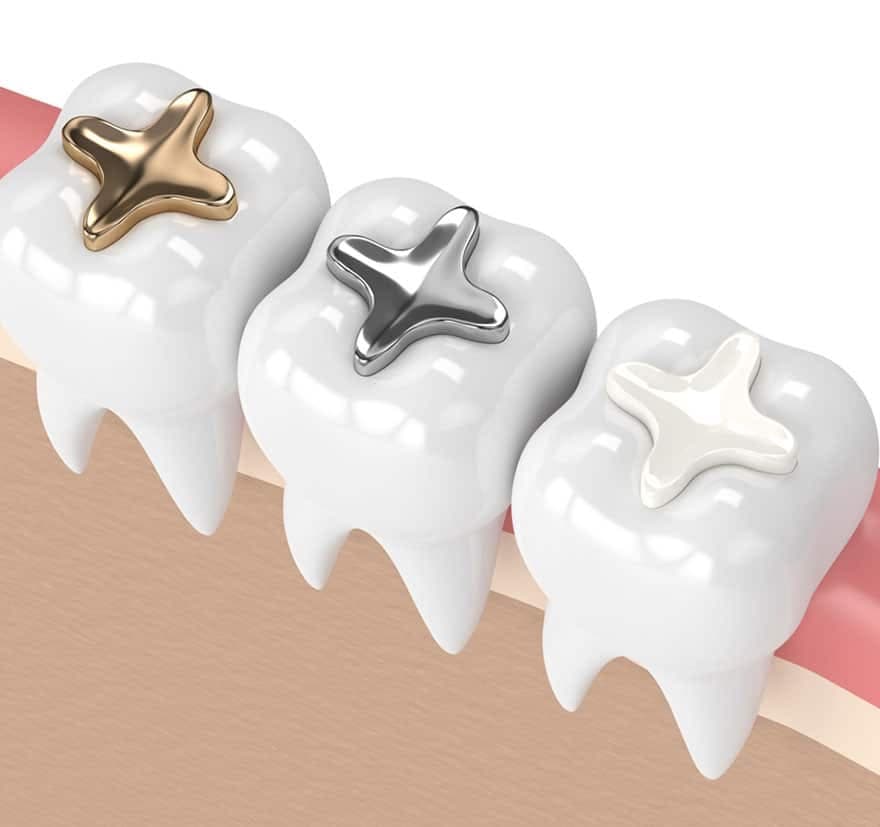
Composite is the material used here. It bonds directly to the tooth, so less healthy enamel needs to be removed than with a silver amalgam filling, and it is matched to the shade of your teeth. Amalgam, ceramic, and gold fillings exist too, and each has its place, but for most cavities composite is the conservative choice, and what a tooth-colored filling costs is covered separately.
A cavity caught at your six-month checkup is a small filling. The same cavity caught a year later can be a crown or a root canal. That is why prevention comes first here.
How long does a filling take?
Most fillings are done in a single visit. Several cavities in the same area can often be treated together in that same visit.
Does getting a filling hurt?
No. The area is fully numb before any work starts, and you will feel pressure and vibration but not pain. Some patients notice mild sensitivity for a few days afterward, which fades on its own. If you are anxious, say so when you book; calming options and music are available.
How much does a filling cost?
The fee depends on the size of the cavity and how many surfaces of the tooth it covers, and most dental plans cover a portion of fillings. Your exact fee is set at your consultation, after Dr. Bhoompalli has seen the tooth and any x-rays, and before anything is done.
How do I care for a filling?
The same way you care for the rest of your teeth: brush twice a day, floss daily, and keep up your cleanings. Avoid chewing ice or very hard candy, which can crack a filling and the tooth around it. At each checkup the filling is examined for wear or leaking at the edges.
Do you need a filling?
A cavity does not heal on its own. It only gets bigger.
Small cavities often cause no pain at all, which is why they are usually found on checkup x-rays rather than by the patient. Once a tooth hurts, the decay is often close to the nerve. If you notice any of these signs, an exam settles the question, and if a filling is the answer it is a short, comfortable visit.
A dark spot or visible hole
A brown or black mark on a tooth, or a pit you can feel with your tongue, is decay that has broken through the enamel.
Sensitivity to hot, cold, or sweets
A sharp twinge with ice water or dessert often means decay has reached the softer dentin under the enamel.
Pain when you bite down
A tooth that hurts under pressure may have a cavity, a crack, or an old filling that has failed.
A chipped or broken tooth
Small chips and worn edges can be rebuilt with the same bonded composite used for fillings.
An old filling that cracked or fell out
The exposed tooth underneath is soft and decays quickly. It should be refilled soon, not eventually.
Decay found on your checkup x-rays
The most common reason for a filling, and the best one. Caught here, it is still a small, simple fix.
Questions about fillings
What patients ask once they know they have a cavity. Anything not covered here is a phone call or a text away.
Still have a question? Call 770-814-7600 or text the same number.
Page updated September 2026
Can I eat right after a filling?
Composite fillings are hardened with a light before you leave, so the filling itself is ready. Wait at least an hour before eating, and until the numbness wears off entirely before chewing anything, so you do not bite your cheek or tongue without feeling it.
Why is my tooth sensitive after the filling?
Some sensitivity to cold or pressure for a few days to a couple of weeks is normal while the tooth settles. If it lasts longer, or if the tooth feels high when you bite, call us. A small adjustment to the filling usually fixes it in a few minutes.
Should I replace my old silver fillings?
Not just because they are silver. A sound amalgam filling with no decay around it can stay. Fillings are replaced when they crack, leak, wear down, or when decay forms at the edges. Dr. Bhoompalli takes a conservative approach and will tell you which of yours, if any, actually need attention.
What if the cavity is too big for a filling?
A filling needs enough healthy tooth around it to hold. When decay has taken too much of the tooth, or the tooth is cracked, a crown covers and protects what is left. If decay has reached the nerve, root canal therapy comes first. You will know which applies before anything starts.
Can a chipped tooth be fixed with a filling?
Often, yes. The same composite material is bonded to the tooth and shaped to rebuild the missing corner or edge. For small chips on front teeth this is a quick, natural-looking fix. Larger breaks may call for a veneer or a crown instead.
Are fillings safe during pregnancy?
Yes. Treating decay is safer than leaving an infection to grow, and local anesthetic is considered safe in pregnancy. The second trimester is usually the most comfortable time for treatment. Tell us when you book so we can plan the visit around you.
How do I keep from needing more fillings?
Brush twice a day with fluoride toothpaste, floss daily, limit sugary drinks and snacking between meals, and keep your six-month cleanings. Checkup x-rays catch decay between teeth while it is still small enough for a simple filling, or early enough to reverse without one.
Where to next?
Related treatment
Dental Crowns
When decay or a large old filling has taken too much of the tooth for a filling to hold, a crown covers what is left so it can take a full bite again.
Explore the treatment
Related concern
Cavities or Decay
Caught early it is a filling; caught late it is more
Explore the concern
Common question
Does an early cavity need a filling or monitoring?
Learn why intact early decay and a cavity with a hole can need different care, and what to ask about monitoring or a filling.
Read the answer