Dental Veneers in Johns Creek
Veneers are thin, custom-made shells bonded to the front of your teeth to cover chips, stains, gaps, and uneven edges. Dr. Bhoompalli matches every one to your face and your bite, so the smile looks like yours, only better.
Free veneer consultation including an exam and a look at your options. Mention the offer when you book.
- years a porcelain veneer typically lasts
- 10 to 15
- from preparation to final placement, for most cases
- 2 visits
- shade and shape, matched to your natural teeth
- Custom

Curious about
veneers?
Book a consultationWhat is a
dental veneer?
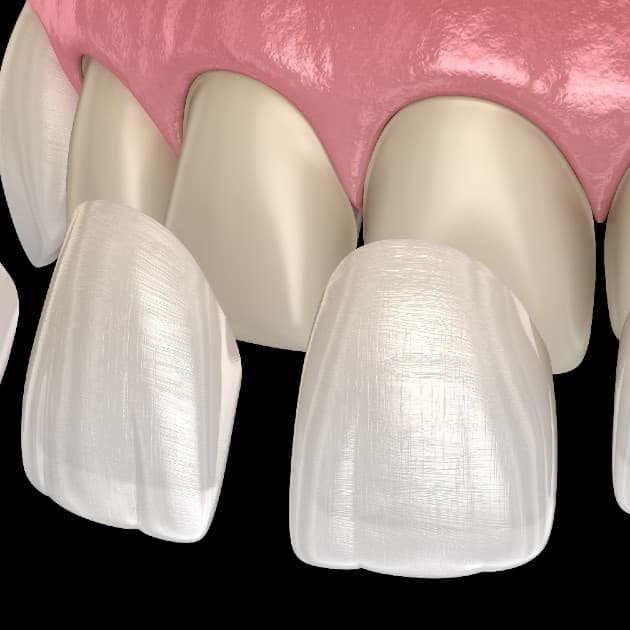
A veneer is a thin shell, usually porcelain, that is bonded to the front surface of a tooth. It covers what is underneath and changes the color, shape, and length of the tooth in one step, which is why a set of veneers can make a smile look brighter, straighter, and more even at the same time, whether the problem is chipped or worn edges or stains that will not whiten.
Porcelain veneers are made in a dental laboratory from an impression of your prepared teeth and usually take two visits. Composite veneers are sculpted from tooth-colored resin directly on the tooth and finished in a single visit. Each has its place, and the choice depends on the tooth, your goals, and your budget; veneers versus bonding compares them side by side.
The process starts with a consultation and exam. Dr. Bhoompalli checks the health of your teeth and gums, looks at how your bite comes together, and can show you a simulation of the result before any enamel is touched.
At Johns Creek Family Dentistry, veneers are planned conservatively: as little enamel removed as possible, and only after checking that your bite will not wear them down. For what a set costs, see veneer cost per tooth.
How long do veneers take?
Porcelain veneers usually take two visits a few weeks apart: one to prepare the teeth and take impressions, one to bond the finished veneers. You wear temporaries in between. Composite veneers are done in a single appointment.
Does getting veneers hurt?
No. The teeth are numbed before any enamel is removed, and the bonding visit is mostly painless. Some people notice temporary sensitivity to cold for a week or two afterward, which settles on its own. If you are anxious, tell us; anti-anxiety medication and music are available.
How much do veneers cost?
Porcelain veneers typically run $1,000 to $2,500 per tooth and composite veneers $300 to $1,000 per tooth, depending on how many teeth are involved. Your exact fee is set at your consultation, which is free.
How do I care for veneers?
Brush with a soft brush and non-abrasive toothpaste, floss daily, and skip biting ice, hard candy, or fingernails. Keep your six-month cleanings; the hygienist polishes veneers with the right paste so they stay glossy.
Are veneers right for you?
Veneers change what people see. Healthy teeth underneath are what make them last.
Veneers suit adults whose front teeth are structurally sound but chipped, worn, stained, or uneven. They are not the answer for teeth with large fillings, active decay, or gum disease, and heavy grinders need a night guard alongside them. Your consultation sorts out whether veneers, bonding, whitening, or Invisalign gets you the result you want.
Chipped or worn front teeth
Edges that have chipped, flattened, or worn short over the years can be rebuilt to their original length.
Deep stains whitening cannot lift
Discoloration from medication, an old injury, or fluorosis that sits inside the tooth rather than on the surface.
Gaps between the front teeth
A small space that bothers you can be closed by widening the neighboring teeth slightly.
Uneven or oddly shaped teeth
Teeth that are shorter, narrower, or pointier than the ones beside them can be brought into proportion.
Mild crowding you would rather not brace
Slightly rotated or overlapping front teeth can be made to look straight, if the bite allows it.
Healthy gums and enough enamel
A veneer bonds best to sound enamel, so cavities and gum problems are treated before anything cosmetic.
Questions about veneers
What patients ask once they are weighing veneers against the alternatives. Anything not covered here is a phone call away.
Still have a question? Call 770-814-7600 or text the same number.
Page updated September 2026
Porcelain or composite: which should I choose?
Porcelain is stronger, resists stains, and typically lasts 10 to 15 years, but it usually takes two visits and a lab. Composite is applied and shaped in a single visit, costs less, and is easier to repair, though it lasts closer to 5 to 7 years. Dr. Bhoompalli walks you through both at your consultation.
Will veneers look fake?
Not when they are matched properly. The shade is chosen against your neighboring teeth, and the shape follows your face and lip line rather than a one-size template.
Is getting veneers reversible?
Traditional porcelain veneers are not. A thin layer of enamel is removed so the veneer sits flush, and that tooth will always need a veneer or similar covering. That is why we talk through whitening, bonding, or Invisalign first when one of those would get you there.
Can veneers fix crooked teeth?
They can make mildly crowded, rotated, or uneven front teeth look straighter without braces. If the crowding is significant or your bite is off, Dr. Bhoompalli may suggest Invisalign first so the veneers are not asked to do a job orthodontics does better.
Do veneers stain?
Porcelain resists coffee, tea, and wine stains far better than natural enamel. Composite veneers can pick up stains over time, the same way a filling can. Either way, the tooth around the veneer can still stain, so regular cleanings keep everything matching.
What if I grind my teeth?
Tell us. Grinding can chip or loosen a veneer, so we check your bite before treatment and usually recommend a custom night guard to protect the investment while you sleep.
Does insurance cover veneers?
Usually not, because veneers are considered cosmetic. Some plans make an exception when a tooth is chipped or damaged, so it is worth checking. We accept most insurance, and an in-house membership plan and financing are available if you want to spread the cost out.
Where to next?
Related treatment
Dental Bonding
Tooth-colored resin sculpted and polished right on the tooth repairs a chip, gap, or stain in a single visit, with no lab and usually no numbing.
Explore the treatment
Related concern
Chipped or Worn Front Teeth
Rebuild an edge, from a quick fix to a full cover
Explore the concern
Common question
Veneers or bonding: which fits the change you want?
Compare veneers and bonding by tooth preparation, repairability, appearance, and bite requirements.
Read the answer
A Smile Designed
Around You
Prefer to talk? Call 770-814-7600 during office hours.